Your Child’s First Dental Visit

Your Child’s First Dental Visit
Although baby teeth (primary teeth) are temporary, their care is essential. Healthy baby teeth play a crucial role in your child’s future oral health, even if your child does not frequently consume sweets. Pediatricians and pediatric dentists recommend that a child’s first dental visit should take place within the first year of life, or when the first tooth erupts. But beyond tooth eruption, many parents wonder— are there other signs of oral discomfort we should be aware of?
How to Care for Your Child’s Oral Health
According to the American Academy of Pediatric Dentistry, oral care should begin as soon as the first tooth appears. Baby teeth are important because they:
- Support proper chewing and nutrition
- Aid speech development
- Guide the correct positioning of permanent teeth
Early Oral Care Tips
- Before teeth erupt: use a clean, damp cloth or gauze to gently wipe the gums
- When teeth appear: use a soft-bristled infant toothbrush
- Avoid toothpaste until around age 2 (unless advised otherwise by your dentist)
- Clean your baby’s mouth after feeding to reduce the risk of early childhood caries
Establishing these habits early helps build a lifetime of good oral hygiene.
Signs Your Baby May Be Teething
Teething can cause discomfort, and recognizing the signs helps parents respond appropriately:
- Increased drooling
- Irritability, especially at night
- Facial rash
- Desire to bite or chew on objects
- General fussiness
- Ear pulling
- Rubbing cheeks
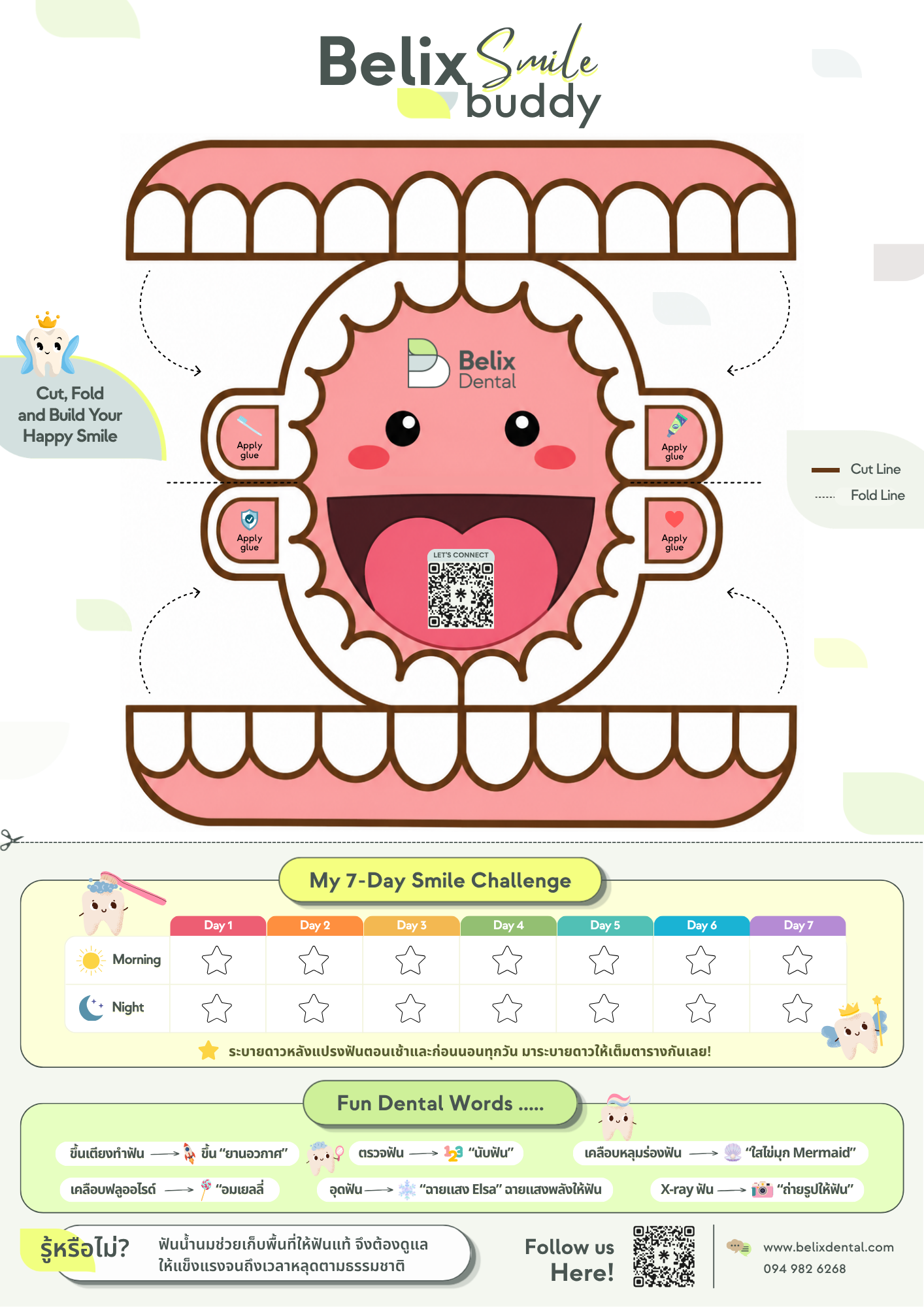
Free Download: Belix Smile Buddy
A fun dental care activity for kids, featuring a 7-Day Smile Challenge Cut, fold, build, and play while building healthy daily brushing habits.
When to Be Concerned
While mild discomfort is normal, certain symptoms require medical attention:
- Fever above 102°F (38.9°C)
- Persistent diarrhea
- Cold symptoms (cough, runny nose)
- Multiple bleeding spots in the gums
These may not be related to teething and should be evaluated by a healthcare professional.
The First Dental Visit Experience
Your child’s first dental visit should ideally occur within their first year. Creating a positive and stress-free experience is key:
- Avoid using sweets as a reward
- Keep the atmosphere calm and encouraging
- Pediatric dental clinics often use toys or distraction techniques
- Appointments are usually short and gentle
In some cases, if a child is anxious, the dentist may recommend gradual follow-ups every 6 months to build familiarity and comfort.
Key Takeaway
Baby teeth may be temporary—but their impact is long-lasting. Early dental visits help:
- Prevent dental problems
- Detect issues early
- Build positive dental habits
- Reduce fear of dental care in the future
Expert Insight by Dr. Pitchaya Vadhanakrai
The first dental visit is not just about checking teeth—it is about guiding parents. Bringing your child in before any problems arise helps create a positive, comfortable experience, rather than one shaped by pain or fear.
Book Your Consultation
If you’re preparing for your child’s first dental visit, our team at Belix Dental is here to guide you every step of the way. At Belix Dental (Langsuan–Ruamrudee, near BTS Ploenchit).
with our specialists
Medical content reviewed by
Dr. Pitchaya Vadhanakrai
Orthodontist, Invisalign Platinum Provider, and Founder of Belix Dental