
Baby Teeth
Many parents believe that baby teeth are only temporary and do not require much attention.
In reality, baby teeth play a crucial role in a child’s oral development—including chewing, speech, jaw growth, and guiding permanent teeth into proper alignment.
Understanding when baby teeth fall out and how to care for them during this transition can significantly reduce future problems such as crowding or misalignment.
What Are Baby Teeth and Why Do They Matter?
What is Baby Teeth?
Baby teeth, also known as primary teeth, are the first set of teeth, totaling 20 teeth. They typically erupt between 6 months to 2–3 years of age. Their functions include:
- Supporting chewing and nutrition
- Aiding speech development
- Maintaining space for permanent teeth
- Guiding proper jaw and facial development
If baby teeth are lost too early or become severely decayed, it can affect how permanent teeth erupt.
When Do Baby Teeth Fall Out?
Most children begin losing baby teeth around 6–7 years old.
The process usually follows this sequence:
- 6–7 years: Front teeth
- 7–9 years: Canines and first molars
- 9–12 years: Back molars
Some variation is normal for each child.
When Should Baby Teeth Be Fully Lost?
By around 11–12 years old, most baby teeth should be replaced by permanent teeth. If baby teeth remain beyond 12–13 years, a dental evaluation is recommended.
How Long Does It Take for Permanent Teeth to Erupt?
After a baby tooth falls out, the permanent tooth usually erupts within:
- A few weeks
- Up to 6 months/li>
- Blockage
- Incorrect eruption path
- Missing permanent tooth
Dental X-rays can help determine the cause and guide treatment.
Common Problems During Tooth Transition

1. Permanent Teeth Growing Behind Baby Teeth
Often seen in lower front teeth. If baby teeth do not fall out naturally, removal may be required.
2. Early Loss of Baby Teeth (Due to Decay)
Can lead to:
- Loss of space
- Shifting of adjacent teeth
- Future crowding
3. Pain or Fear During Loose Teeth Stage
Children may feel discomfort or try to pull teeth prematurely. Parental guidance is important.
4. Crowding or Misalignment
Limited jaw space or improper timing may cause permanent teeth to erupt unevenly. Early evaluation helps simplify future orthodontic treatment.
How to Care for Baby Teeth During Transition
- Maintain proper oral hygiene
- Brush twice daily
- Use age-appropriate fluoride toothpaste
- Parents should assist younger children
- Avoid Playing with Loose Teeth
Let teeth fall out naturally to prevent:- Infection
- Premature loss
- Be Mindful of Diet
Avoid- Hard foods
- Sticky sweets
- Visit the Dentist Regularly
Every 6 months to:- Monitor tooth development
- Detect problems early
- Guide proper growth
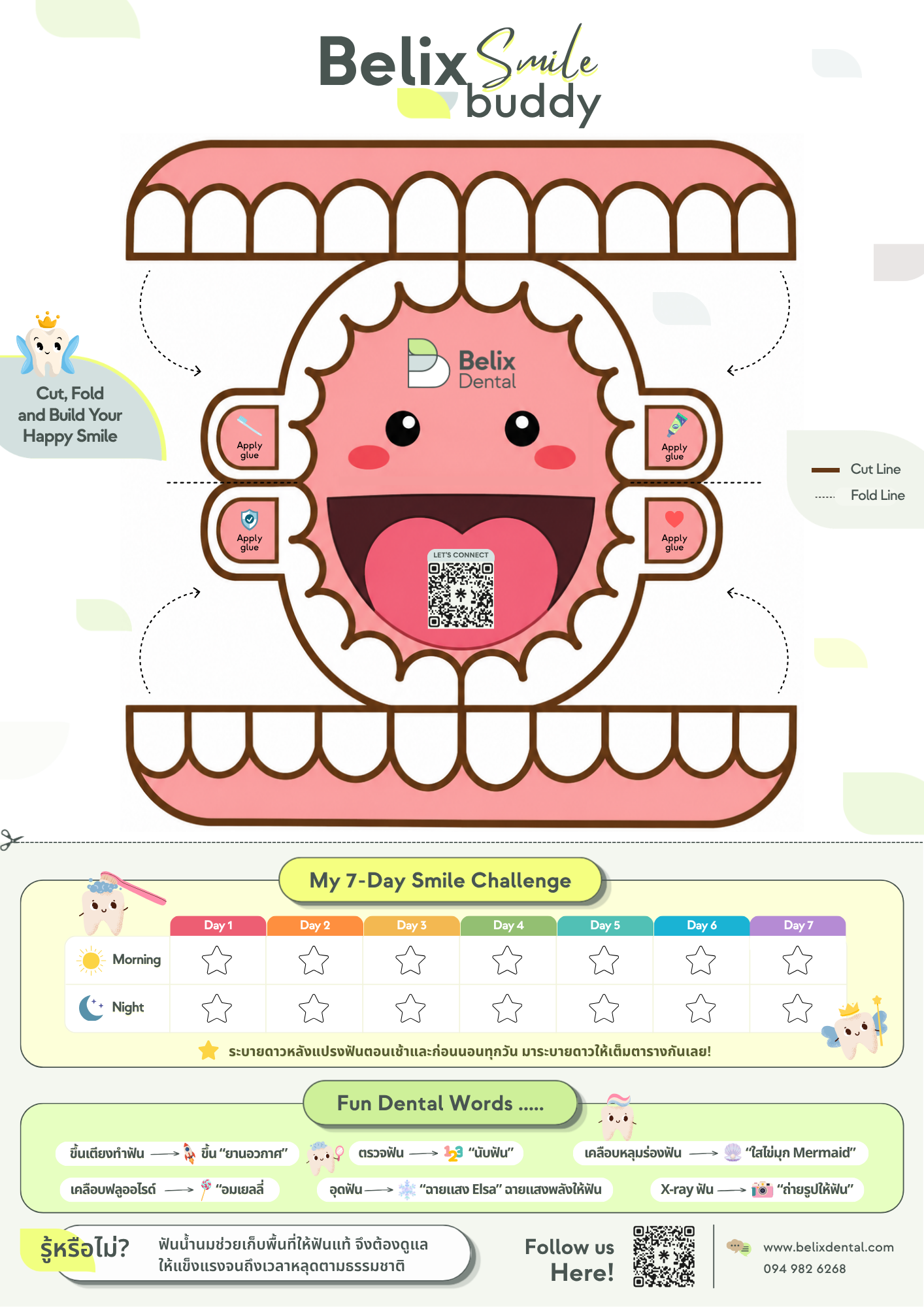
Free Download: Belix Smile Buddy
A fun dental care activity for kids, featuring a 7-Day Smile Challenge Cut, fold, build, and play while building healthy daily brushing habits.
FAQs: Baby Teeth
Q1: My child is 7 but no loose teeth yet—is this normal?
ตอบ : Yes, but a dental check-up is recommended if concerned.
Q2: Can baby teeth be pulled at home?
ตอบ : Not recommended unless very loose. Always consult a dentist if unsure.
Q3: What if permanent teeth grow behind baby teeth?
ตอบ : A dentist may need to remove the baby tooth.
Q4: Do cavities in baby teeth need treatment?
ตอบ : Yes. Untreated decay can affect permanent teeth and cause complications.
- Toothache and InfectionToothache and Infection: Severe pain and risk of spreading infection.
- Impact on Permanent Teeth :Inflammation can damage developing permanent teeth, leading to lifelong enamel defects or staining.
- Premature Tooth Loss: Early loss of baby teeth causes surrounding teeth to shift, leading to misaligned permanent teeth.
Fillings or pulp treatments help maintain jaw space and guide permanent teeth into their correct positions, reducing the need for future orthodontic treatment.
Conclusion
Baby teeth are far more important than many people realize.
Proper care during early childhood plays a key role in:
- Healthy oral development
- Proper alignment of permanent teeth
- Reducing the need for complex orthodontic treatment in the future
At Belix Dental, we focus on early evaluation and preventive care—helping children grow with healthy, confident smiles.
Expert Insight by Dr. Pitchaya Vadhanakrai
Gaps between baby teeth are often a positive sign.
Since permanent teeth—especially front teeth—are larger, these spaces help accommodate proper alignment as they erupt.
On the other hand, premature loss of baby teeth may lead to space loss, requiring interventions such as space maintainers to guide proper eruption.
Book Your Consultation
If your child is in the stage of baby teeth transition, our team at Belix Dental (Langsuan–Ruamrudee, near BTS Ploenchit) is here to help.We provide personalized monitoring of dental development and early guidance to support healthy, well-aligned permanent teeth.
with our specialists
Medical content reviewed by
Dr. Pitchaya Vadhanakrai
Orthodontist, Invisalign Platinum Provider, and Founder of Belix Dental


