Gum Contouring
What Is It? Can It Fix a Gummy Smile?
When you smile and notice too much gum showing, it can quietly affect your confidence. Some people begin to hold back their smile or avoid laughing fully—when in fact, a smile should feel effortless and natural.
As you explore solutions, you may come across multiple options—gum contouring, Botox, or other treatments—leading to an important question: “Which approach is right for me?”
This guide will walk you through what gum contouring is, who it is suitable for, and what it can effectively treat—along with key considerations before making a decision.
What Is Gum Contouring?
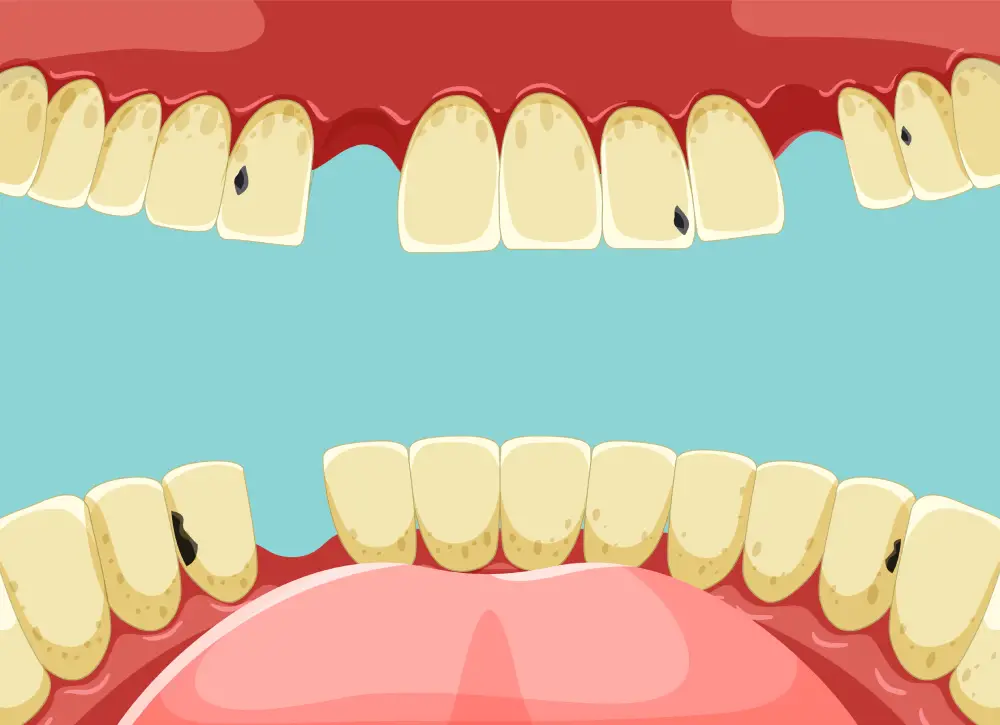
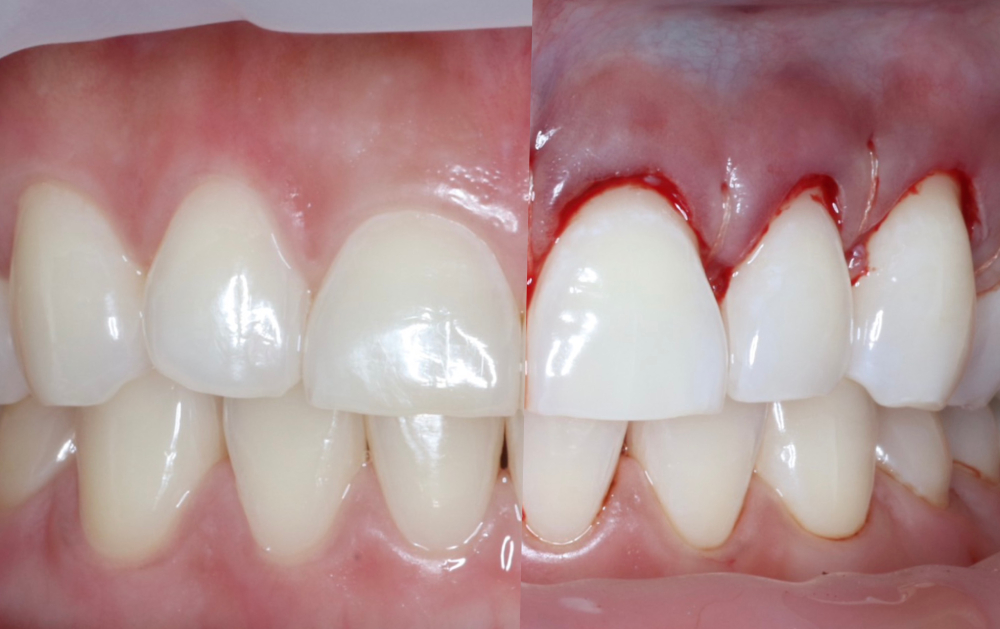
Gum contouring (also known as gingivectomy) is a dental procedure that reshapes the gum line to create a more balanced proportion between teeth and gums.
The dentist removes or adjusts excess gum tissue, allowing more of the natural tooth structure to be visible. This helps improve smile balance and overall aesthetics—particularly in cases where:
- Teeth appear short
- Gums cover too much of the teeth
- A gummy smile is present
Today, gum contouring can be performed using:
- Traditional surgical instruments
- Laser technology (which reduces bleeding and speeds up healing)
The most appropriate method depends on your individual gum condition and underlying cause, which should always be evaluated by a dentist.
Types of Gum Contouring (Based on the Cause)
The approach to gum contouring depends primarily on the root cause of the problem:
Case 1: Excess Gum Tissue (Normal Bone Structure)
If the issue is limited to excess gum tissue, gum contouring alone is usually sufficient. There are several techniques available:
- Scalpel (traditional surgery): Allows precise shaping, especially in complex cases involving multiple teeth. However, it may involve more bleeding and a slightly longer recovery.
- Laser gum contouring: Offers minimal bleeding, smaller wounds, and faster healing. Ideal for less complex cases, though it may not be suitable for all situations.
- Electrosurgery: Uses controlled heat to cut and coagulate tissue simultaneously, helping reduce bleeding. Requires high operator precision.
Case 2: Excess Gum Tissue with Excess Bone
In some cases, the issue is not only the gum but also the underlying bone level. This requires a procedure called crown lengthening, where both gum and bone are reshaped to achieve a stable, long-term result. If only the gum is treated without addressing the bone, there is a high chance that the gum will grow back to its original position.
What Can Gum Contouring Treat?
Gum contouring is not only cosmetic—it can address several structural and aesthetic concerns:
- Gummy smile: Reduces excessive gum display for a more balanced smile
- Short-looking teeth: Reveals more of the natural tooth structure
- Uneven gum line: Creates symmetry across teeth
- Pre-treatment for veneers or crowns: Establishes proper proportions before restorative work
- Certain gum conditions: May help in selected cases of localized gum overgrowth
Best results are achieved when the root cause lies primarily in the gum tissue.
Who Is a Good Candidate?
Gum contouring is most effective when the issue originates from the gums. Suitable candidates include:
- Patients with excess gum tissue covering the teeth
- Those whose teeth appear short but are actually normal in length
- Individuals with uneven gum levels
- Patients preparing for cosmetic dentistry (e.g., veneers, crowns)
- Cases of tooth wear, where increasing visible tooth structure improves restoration stability
However, if the gummy smile is caused by lip muscle activity or skeletal structure, then gum contouring alone may not be sufficient, and additional treatments may be required.
Before Gum Contouring
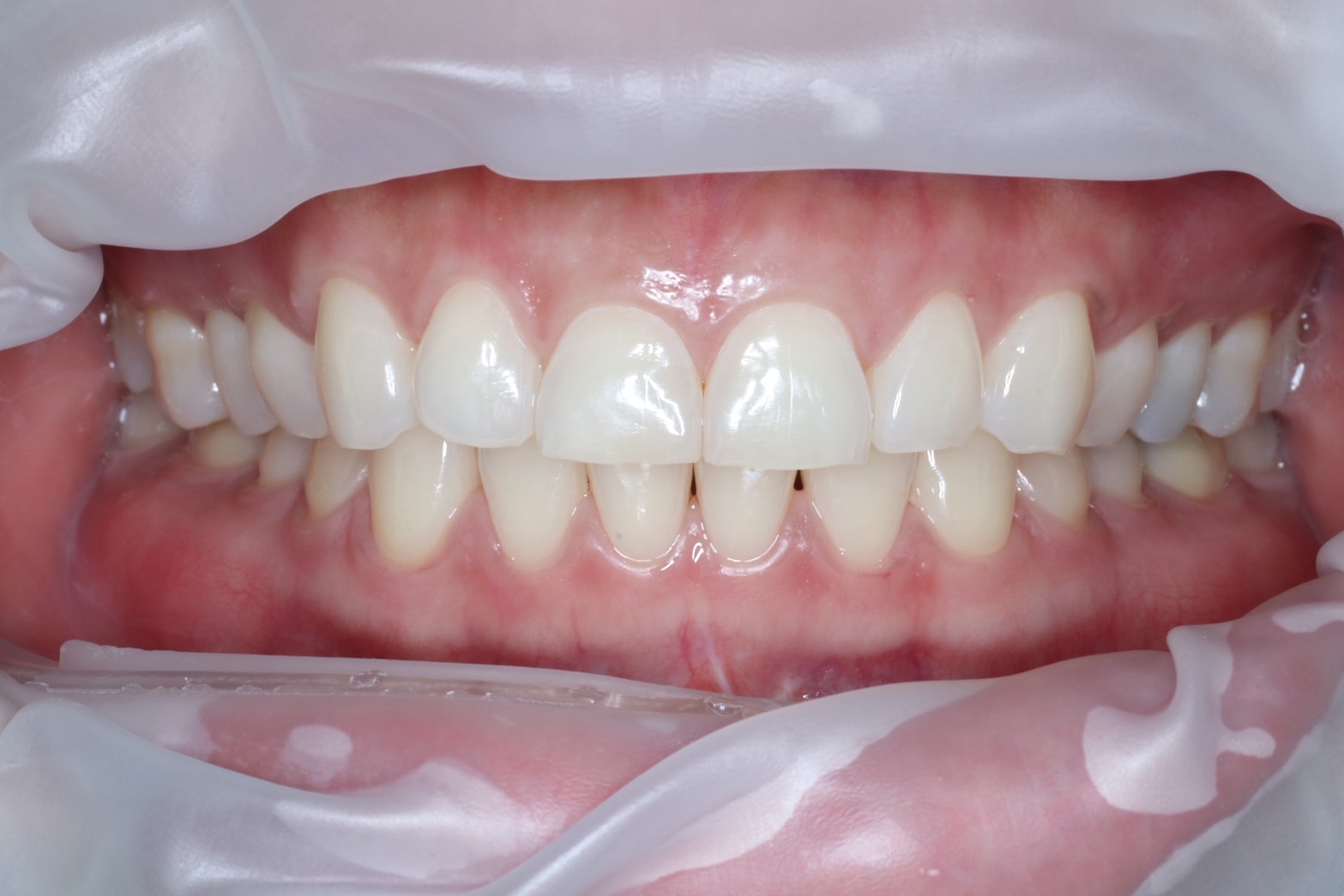
Immediately After Gum Surgery
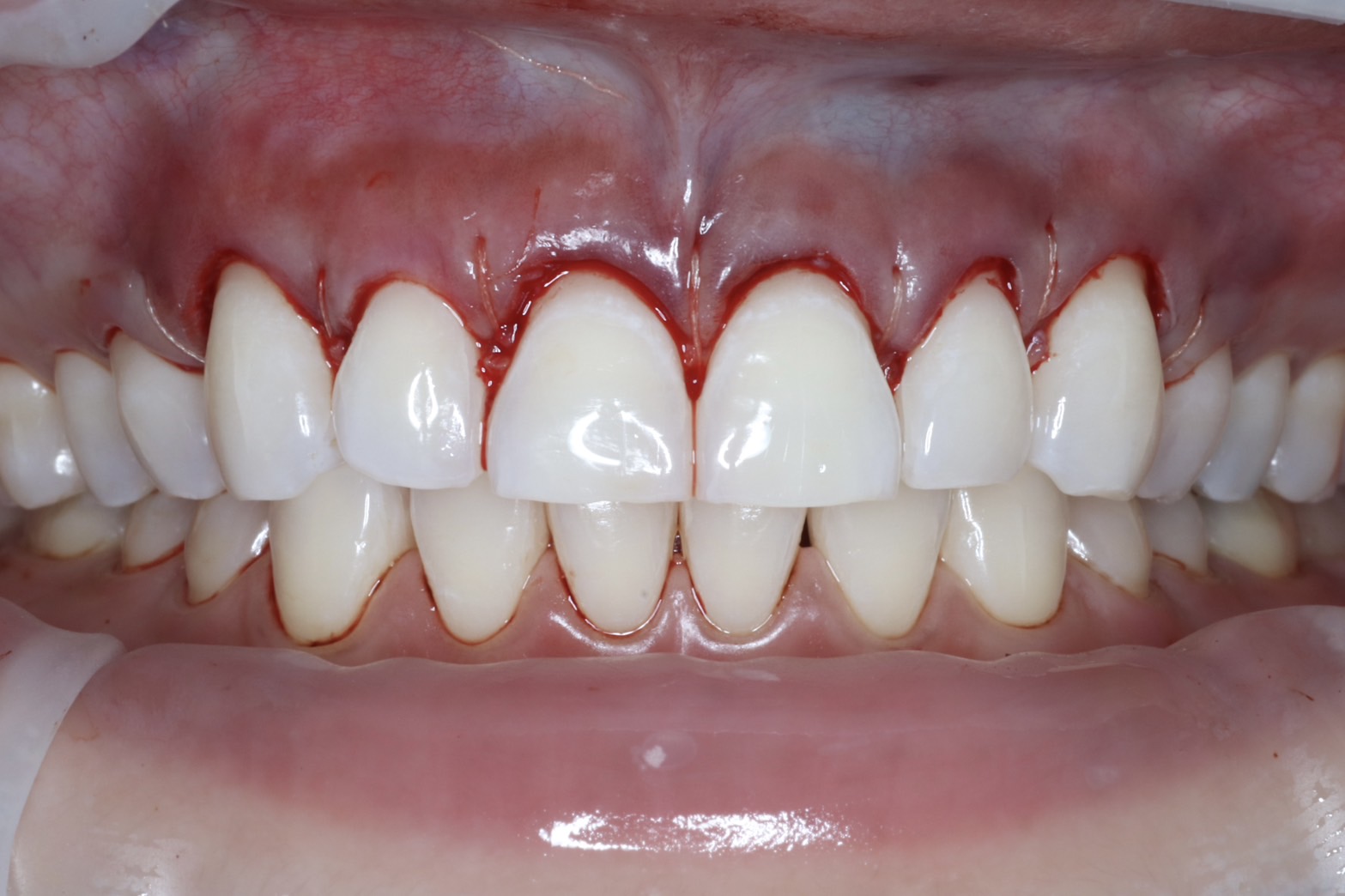
2 Weeks After Gum Surgery
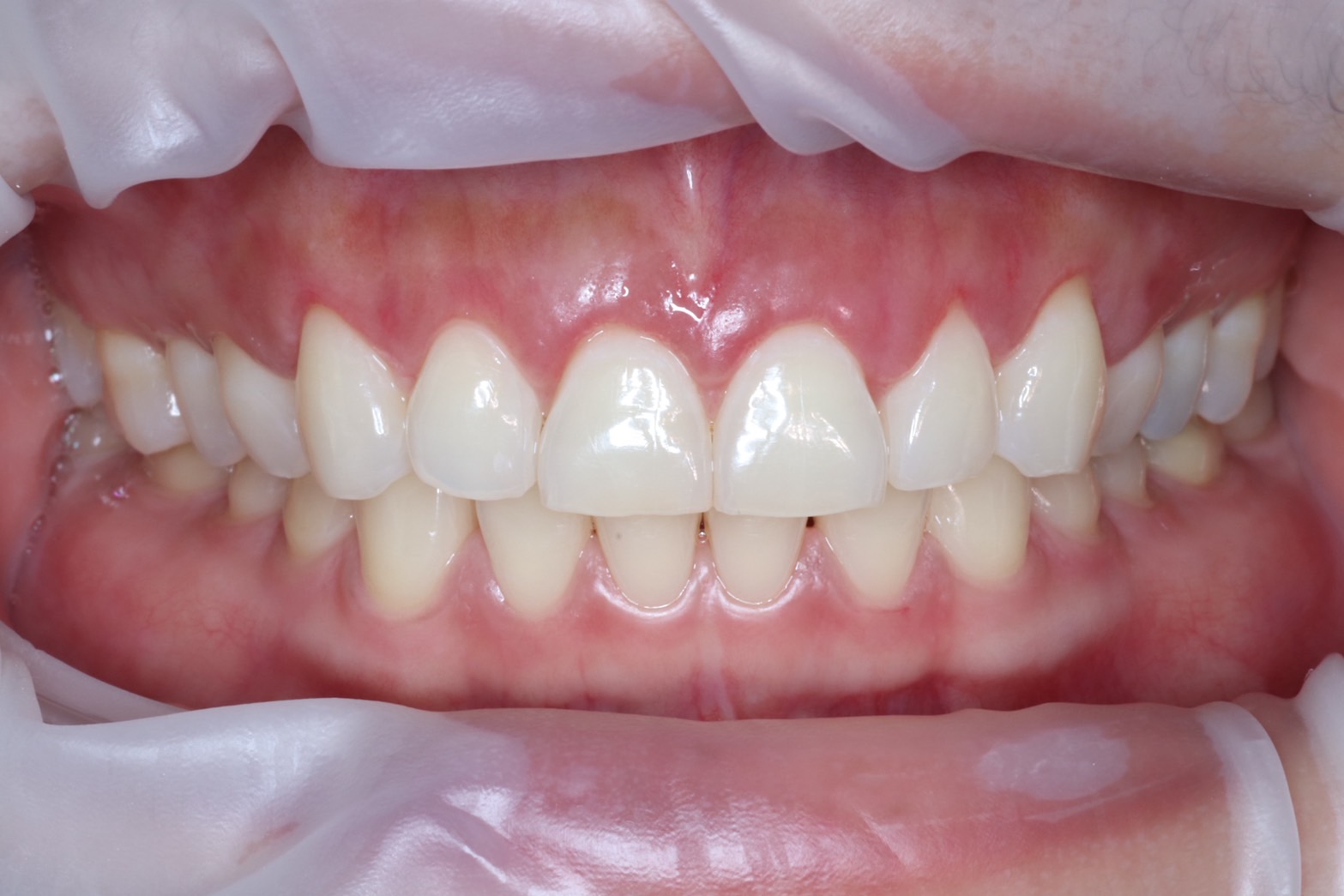
FAQs: Gum Contouring
Q1: How much does gum contouring cost?
Typically starts from 4,000–8,000 THB per area, depending on complexity.
Q2: Is it painful?
The procedure itself is not painful due to local anesthesia. Mild discomfort may occur for 1–3 days afterward.
Q3: How long is recovery?
Most patients return to normal activities within 3–7 days, with full healing in 1–2 weeks.
Q4: What can I eat afterward?
Soft, cool, non-irritating foods such as porridge or yogurt are recommended initially. Avoid spicy, hot, or hard foods.
Q5: Are the results permanent?
Results are generally long-lasting, though minor regrowth may occur in some cases depending on individual factors.
Conclusion
Gum contouring is an effective way to improve smile balance—especially when excess gum tissue is the primary cause. However, the best results begin with accurate diagnosis. Whether the issue lies in the gums, teeth, muscles, or skeletal structure will determine the most appropriate treatment approach.
Expert Insight by Dr. Pitchaya Vadhanakrai
A slight gum display is normal. If only about 1–2 mm of gum is visible and it does not affect your confidence, treatment may not be necessary. However, when excessive gum coverage alters the natural proportions of the smile, gum contouring can significantly improve balance and aesthetics.
Book Your Consultation
If you have thick gum tissue, excessive gum coverage, or uneven gum contours, gum reshaping can enhance the proportion of your smile.
At Belix Dental (Langsuan–Ruamrudee, near BTS Ploenchit), our team provides:
- Precise diagnosis of the underlying cause
- Personalized treatment planning
- Natural, refined results
Begin your journey toward a more balanced, confident smile.
with our specialists
Medical content reviewed by
Dr. Pitchaya Vadhanakrai
Orthodontist, Invisalign Platinum Provider, and Founder of Belix Dental