Mouth Breathing Can Ruin Your Face

Mouth Breathing Can Ruin Your Face
Nasal breathing is the body’s natural and ideal way to breathe. It helps filter, warm, and humidify the air before it reaches your lungs. However, many people unconsciously breathe through their mouth—during the day or while sleeping. While it may seem harmless, chronic mouth breathing can have long-term effects on both oral health and facial development.
What Causes Mouth Breathing?
Although we are designed to breathe through the nose, certain conditions can make nasal breathing difficult:
- Nasal congestion from colds, flu, or sinus infections
- Allergies (pollen, dust, pollution)
- Nasal polyps
- Enlarged adenoids (common in children)
- Foreign objects in the nose (especially in young children)
When nasal airflow is blocked, the body adapts by switching to mouth breathing.
How Mouth Breathing Affects Oral Health
1. Dry Mouth and Increased Risk of Cavities
Mouth breathing often leads to dry mouth (xerostomia), reducing saliva flow. Saliva plays a critical role in protecting teeth, so reduced saliva can result in:
- Bad breath
- Higher risk of tooth decay
- Increased plaque accumulation
2. Malocclusion and Altered Facial Growth (Especially in Children)
Children who habitually breathe through their mouth may develop:
- Protruding upper front teeth
- Misaligned teeth (malocclusion)
- Narrow dental arches
- “Long face” facial pattern
This affects not only appearance but also:
- Speech
- Chewing efficiency
- Jaw development
3. Gum Inflammation from Dryness
Continuous airflow through the mouth dries out the gums, especially in the front teeth area. This may lead to:
- Red, swollen gums
- Localized gingivitis
- Gum tissue overgrowth in some cases
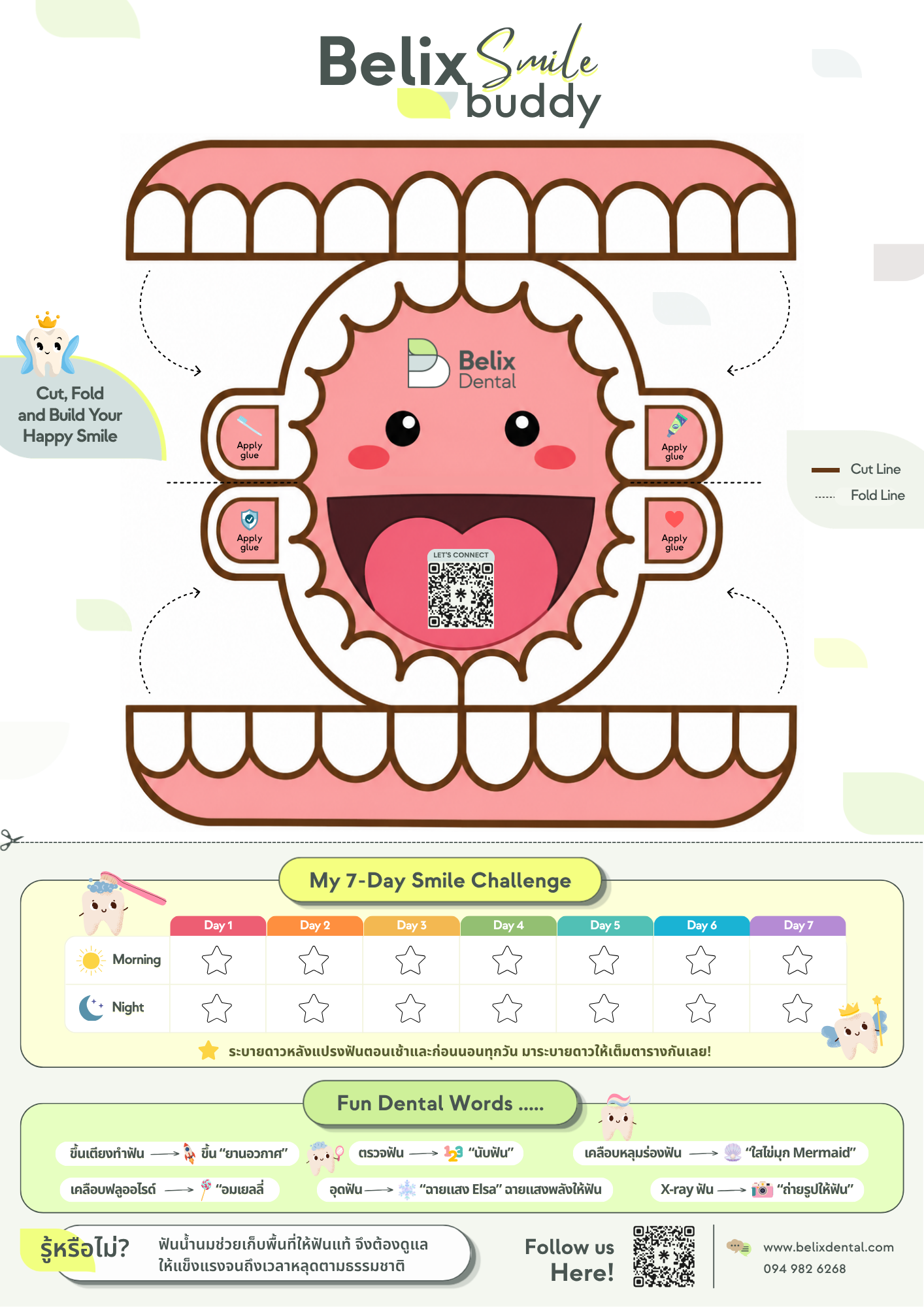
Free Download: Belix Smile Buddy
A fun dental care activity for kids, featuring a 7-Day Smile Challenge Cut, fold, build, and play while building healthy daily brushing habits.
How Is Mouth Breathing Treated?
Treatment depends on identifying the underlying cause. A proper evaluation by a dentist or physician is essential. Possible treatments include:
- Nasal irrigation or sprays
- Allergy management
- Sinus treatment
- Surgical intervention (e.g., adenoids or airway obstruction)
Managing Related Oral Health Issues
- Dry mouth → Sugar-free gum, saliva substitutes, hydrating oral care
- Malocclusion → Orthodontic treatment (e.g., clear aligners or braces)
- Gum inflammation → Improved oral hygiene and habit correction
Key Takeaway
Chronic mouth breathing is not a harmless habit. Especially in children, it can impact:
- Facial development
- Teeth alignment
- Overall oral health
Early diagnosis and intervention are key to preventing long-term complications.
Expert Insight by Dr. Pitchaya Vadhanakrai
- Mouth breathing is often a sign of airway obstruction, not just a habit.
- In growing children, it can significantly influence jaw development and facial structure.
- Early interceptive orthodontics combined with airway evaluation leads to better long-term outcomes.
Book Your Consultation
Mouth breathing is not a normal breathing pattern. If you or your child exhibit these signs, early assessment is recommended to ensure optimal long-term outcomes.
with our specialists
Medical content reviewed by
Dr. Pitchaya Vadhanakrai
Orthodontist, Invisalign Platinum Provider, and Founder of Belix Dental