When a Child Falls and Injures Their Teeth: What Every Parent Should Know
One of the most distressing moments for parents is when a child falls and hits their front teeth. These accidents can happen anytime—while learning to walk, playing at home, or running around with friends. In the moment, it’s natural to feel overwhelmed and unsure:
Will the tooth recover? Should it be put back? Is it permanent damage?

Dental injuries in children are not minor. The first 30–60 minutes are critical—and the way you respond can significantly affect your child’s future dental development.
Why Do These Accidents Happen?
Young children are still developing balance and coordination, making falls more common. Typical causes include:
- Learning to walk and falling forward
- Tripping over toys or carpets
- Climbing furniture and falling
- Slippery floors (bathroom or home surfaces)
- Accidental collisions during play
Baby Teeth vs. Permanent Teeth: Why It Matters
Most injuries involve the front teeth, which are more exposed.
- Baby teeth (primary teeth) are more prone to displacement or intrusion
- Permanent teeth are irreplaceable and require immediate attention
An injury to baby teeth can also affect the developing permanent teeth underneath—making proper evaluation essential.

Common Types of Dental Injuries
1. Knocked-Out Tooth (Avulsion)
The entire tooth is displaced from the socket.
- Baby teeth: usually not replanted
- Permanent teeth: urgent emergency—time-sensitive
2. Fractured Tooth
Ranges from minor chips to deep fractures exposing the inner layers.
- Mild: smoothing or bonding
- Severe: may require root canal or extraction
3. Intruded Tooth (Tooth Pushed Into Gum)
The tooth appears shorter or “missing” because it has been pushed into the bone.
- Can affect surrounding bone and developing permanent teeth
- Requires immediate professional evaluation
4. Loose Tooth
The tooth moves more than normal due to ligament or bone injury.
- May require stabilization (splinting)
- Needs monitoring to ensure proper healing
What Parents Should Do Immediately
Step 1: Stay Calm and Assess
Check bleeding, pain level, and the type of injury.
Step 2: First Aid by Situation
Knocked-Out Tooth
- Hold the tooth by the crown only (not the root)
- Rinse gently (do not scrub)
- Store in milk, saline, or inside the mouth (under the tongue)
- Do NOT store in water
- See a dentist within 30 minutes (for permanent teeth)
Fractured Tooth
- Save any broken pieces
- Rinse the mouth gently
- Apply pressure if bleeding
- Avoid chewing on that side
- Visit a dentist as soon as possible
Intruded Tooth
- Do not attempt to reposition
- Apply a cold compress
- Provide soft foods only
- Seek immediate dental care
Loose Tooth
- Avoid touching or wiggling
- Rinse gently with saline
- Eat soft foods
- Visit a dentist for evaluation
What NOT to Do
- Do not scrub or disinfect the tooth with alcohol
- Do not let the tooth dry out
- Do not delay seeking treatment
- Do not attempt to reposition intruded teeth yourself
Treatment Options
Depending on the severity, dentists may recommend:
- Splinting (for loose teeth)
- Bonding or crowns (for fractures)
- Monitoring (for minor injuries)
- Root canal treatment (if pulp is affected)
- Extraction (if the tooth cannot be saved)
Aftercare
For optimal healing (first 1–2 weeks):
- Avoid hard, sticky, or extreme-temperature foods
- Brush gently with a soft toothbrush
- Rinse with warm saline
- Attend follow-up visits
- Watch for warning signs (pain, discoloration, swelling)
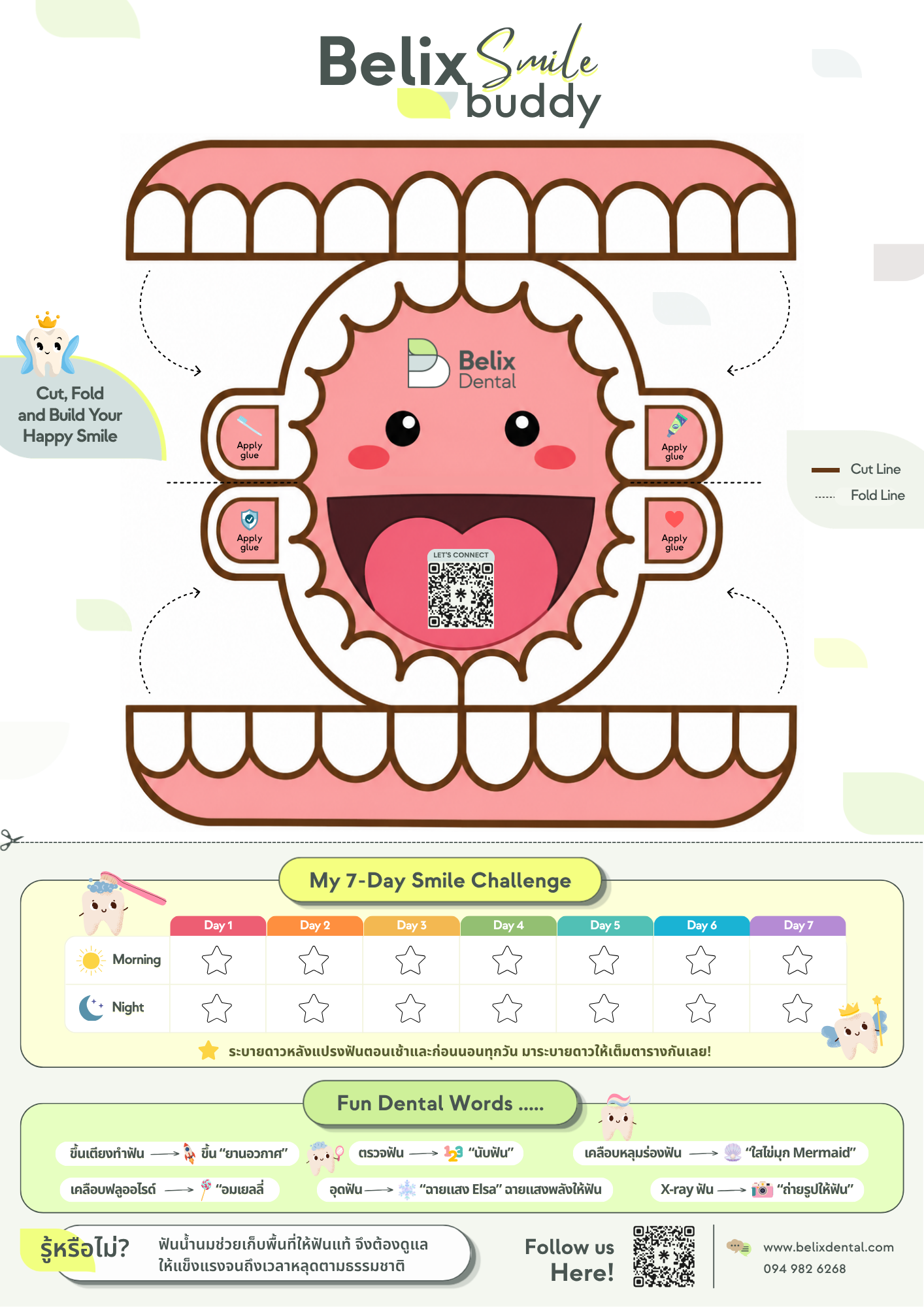
Free Download: Belix Smile Buddy
A fun dental care activity for kids, featuring a 7-Day Smile Challenge Cut, fold, build, and play while building healthy daily brushing habits.
FAQs: When a Child Falls and Injures Their Teeth
Q1: Should baby teeth be replanted?
No. Replanting baby teeth may damage developing permanent teeth.
Q2: How long do we have to save a permanent tooth?
The critical window is 30–60 minutes. The sooner, the better.
Q3: Is an intruded tooth dangerous?
Yes. It may affect permanent tooth development and requires evaluation.
Q4: When should I see a dentist?
Immediately for all dental trauma, especially with bleeding, displacement, or pain.
Expert Insight by Dr. Pitchaya Vadhanakrai
In dental trauma, two key principles can make a significant difference in long-term outcomes. First, baby teeth should not be replanted—priority should be given to evaluating the developing permanent teeth underneath. Second, permanent teeth have a critical “golden window” of approximately 30 minutes, where proper handling and timely care can significantly increase the chance of successful reattachment. Preserving the vitality of the root surface is essential, as no replacement can fully replicate the function and biology of a natural tooth.
Book Your Consultation
If your child has experienced a dental injury—such as a knocked-out, broken, or displaced tooth—our team at Belix Dental (Langsuan–Ruamrudee, near BTS Ploenchit) is here to help. We provide urgent dental assessment using Digital X-ray technology and personalized treatment planning for dental trauma in children.
with our specialists
Medical content reviewed by
Dr. Kjohndej Vanaratana
Endodontic
Dr. Pitchaya Vadhanakrai
Orthodontist, Invisalign Platinum Provider, and Founder of Belix Dental
And special thanks to the source : The Thai Pediatric Dentistry Association