
Underbite in Children
Underbite in children is a condition that many parents are unsure about—should it be treated, or will it resolve on its own as the child grows?
Some may think it is only a cosmetic concern, but in reality, an underbite can reflect deeper issues related to tooth alignment and jaw development.
If you’re unsure whether your child needs treatment, this article will help you understand the risks of leaving an underbite untreated—and why early intervention matters.
What Is an Underbite?
An underbite (also known as anterior crossbite) occurs when the lower front teeth sit in front of the upper front teeth when biting.
It may be caused by:
- Tooth positioning alone
- Jaw structure (skeletal factors)
- Or a combination of both
Common Signs:
- Lower front teeth overlap upper teeth
- Prominent or protruding chin
- Misaligned bite
- Concave facial profile (side view)
4 Common Causes of Underbite in Children
- Genetics Some children inherit jaw structure traits, such as a smaller upper jaw or a more prominent lower jaw. These cases rarely resolve on their own.
- Childhood Habits Habits such as prolonged thumb sucking, tongue thrusting, and mouth breathing—often caused by allergies or nasal obstruction—can significantly impact both tooth alignment and jaw development.
- Early Loss of Baby Teeth When baby teeth are lost too early, adjacent teeth may shift into the space, leading to improper eruption of permanent teeth.
- Imbalanced Jaw Growth In some children, the lower jaw grows faster or more prominently than the upper jaw, resulting in a developing underbite over time.
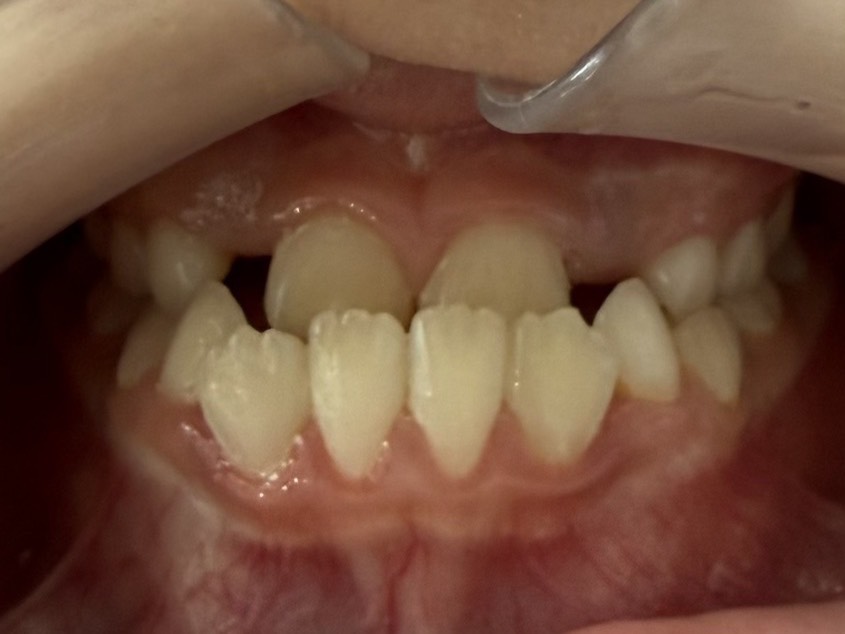
Is Underbite in Children Dangerous?
Short answer: It should not be ignored.
During childhood, the jaw is still growing and highly adaptable—making it the ideal time for correction.
If left untreated, an underbite can:
- Influence long-term jaw growth
- Affect facial structure
- Lead to functional problems in adulthood
Potential Long-Term Effects
- Difficulty chewing inefficient digestion and jaw muscle imbalance
- Uneven tooth wear risk of fractures and jaw joint (TMJ) discomfort
- Facial imbalance protruding chin and altered facial profile
- More complex treatment later may require jaw surgery in adulthood
When Should You Take Your Child to the Dentist?
1. Visible underbite when biting
Even if mild, early evaluation is important.
2. Difficulty chewing or jaw discomfort
Signs of functional bite problems.
3. Facial asymmetry developing
Early signs of skeletal involvement.
4. Mixed dentition stage (around age 6–9)
This is the ideal window for early orthodontic intervention.
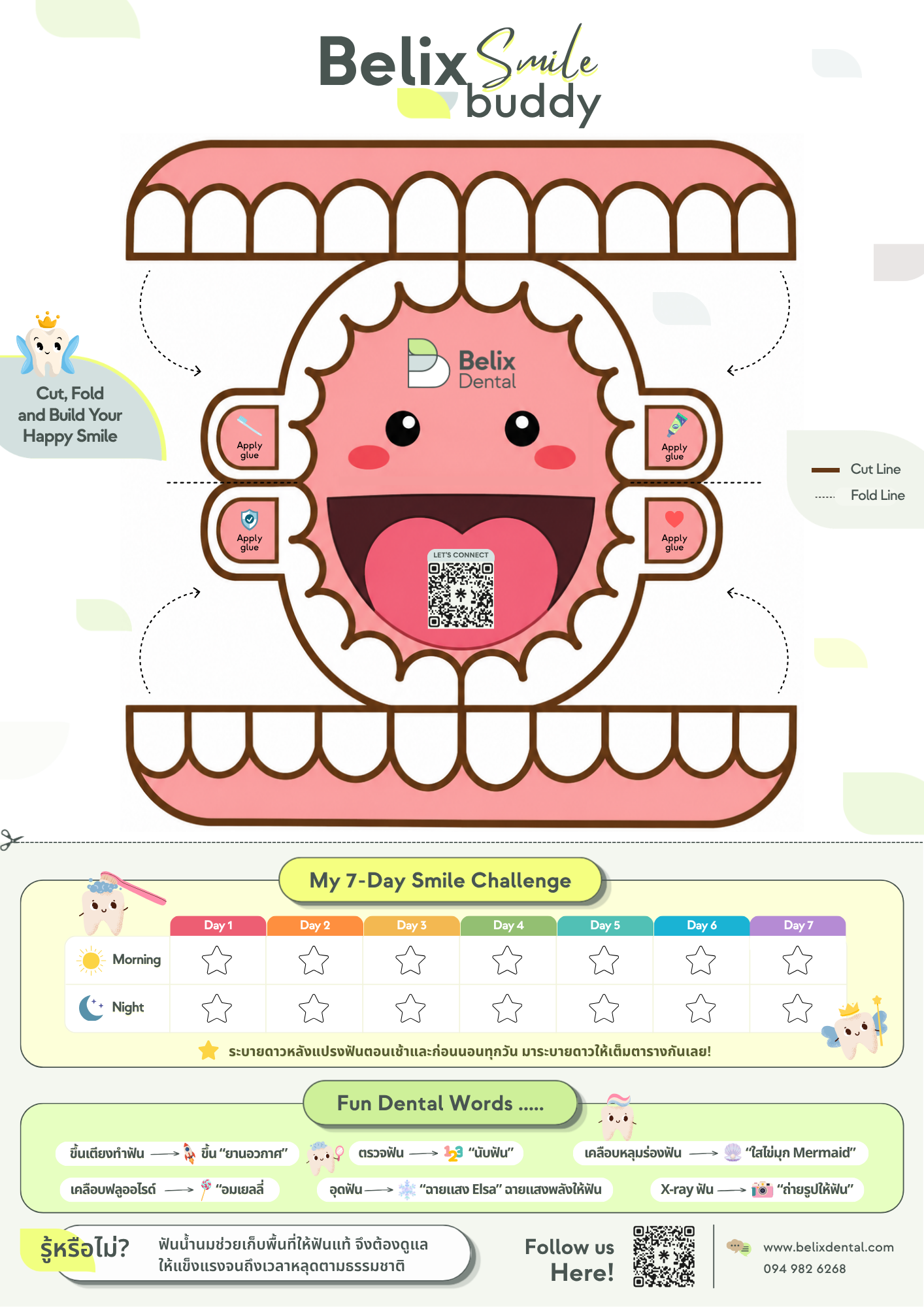
Free Download: Belix Smile Buddy
A fun dental care activity for kids, featuring a 7-Day Smile Challenge Cut, fold, build, and play while building healthy daily brushing habits.
Treatment Options
1. Early Orthodontic Treatment
Focuses on:
- Correcting tooth position
- Guiding jaw growth
2. Palatal Expansion
Used when the upper jaw is narrow.
A palatal expander (including modern options like Invisalign Palatal Expander) helps:
- Widen the upper jaw
- Create space for proper alignment
- Improve bite relationship
FAQs: Underbite in Children
Q1: Will an underbite correct itself?
ตอบ : In most cases, no—especially if related to jaw structure.
Q2: What is the best age for treatment?
ตอบ : Around 6–9 years old, when growth can be guided effectively.
Q3: Is Invisalign Palatal Expander better than traditional expanders?
ตอบ : It is more comfortable and aesthetic, but suitability depends on each case.
Q4: What happens if untreated?
ตอบ : More complex treatment later, potentially including jaw surgery.
Q5: Is treatment painful?
ตอบ : Not painful, but mild pressure or tightness may occur initially.
Conclusion
Underbite in children is more than just a cosmetic concern. If left untreated, it can affect chewing, speech, facial development, and long-term confidence.
Early diagnosis and treatment allow for simpler, more effective correction—often avoiding complex procedures in the future.
At Belix Dental Clinic, we focus on early assessment of jaw growth and dental development, using advanced digital technology to create personalized treatment plans that support both function and facial harmony.
Expert Insight by Dr. Pitchaya Vadhanakrai
Childhood is the most important phase for guiding jaw development.
Think of it like shaping a young tree—when it’s still growing, it’s flexible and easier to guide. Once fully grown, correction becomes more complex.
Early orthodontic treatment is not about “finishing braces early,” but about guiding jaw growth in the right direction—laying the foundation for long-term health and balance.
Book Your Consultation
If your child shows signs of underbite or jaw development concerns, our team at Belix Dental (Langsuan–Ruamrudee, near BTS Ploenchit) is here to help. We use advanced digital scanning to assess jaw growth and create personalized early treatment plans.with our specialists
Medical content reviewed by
Dr. Pitchaya Vadhanakrai
Orthodontist, Invisalign Platinum Provider, and Founder of Belix Dental


